
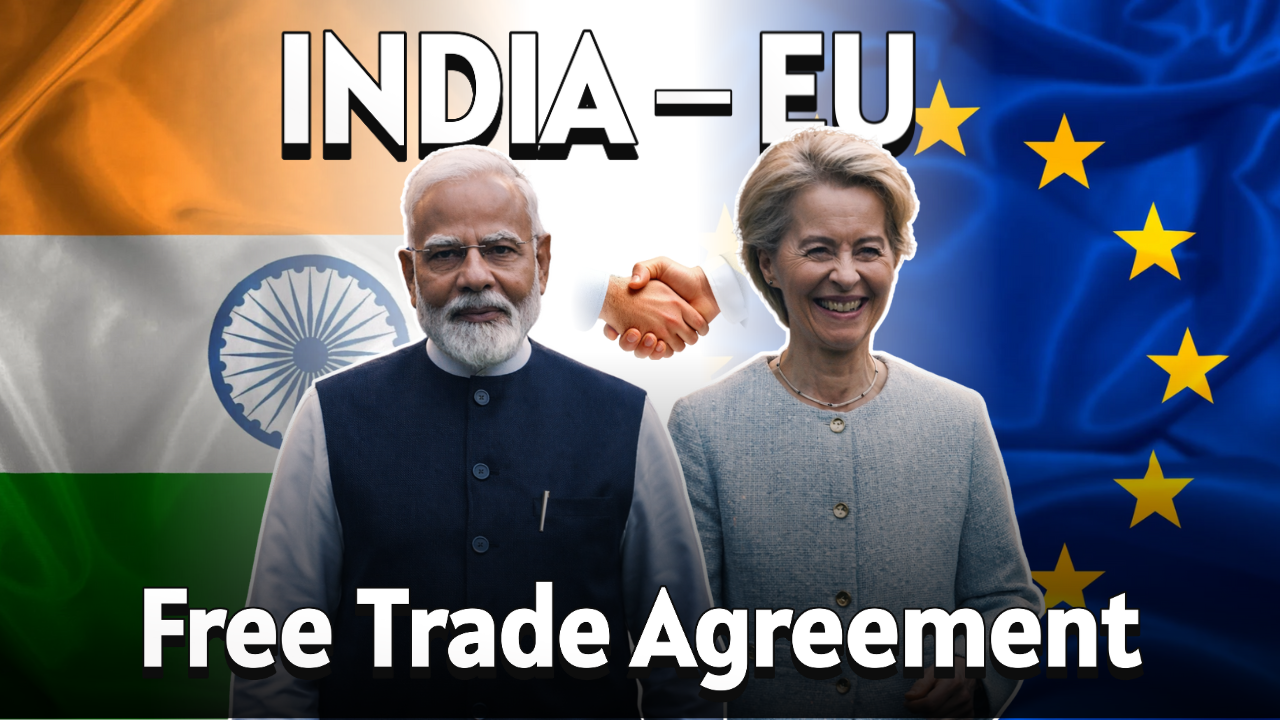
Introduction: Why the India–EU Trade Agreement Matters for Finance Professionals
The proposed India–European Union Trade Agreement (India–EU FTA) is not just about tariffs and exports—it is a game changer for accounting, GST, and international taxation.
For CA firms, tax consultants, CFOs, and outsourcing companies, this agreement will directly impact:
-
Financial reporting
-
Indirect tax compliance
-
Cross-border taxation
-
Transfer pricing documentation
-
Regulatory disclosures
As trade volumes between India and the EU increase, financial transparency and tax compliance standards will tighten, making this agreement especially important for accounting professionals.
Overview of the India–EU Trade Agreement
The India–EU Trade Agreement aims to:
-
Reduce or eliminate customs duties
-
Simplify trade procedures
-
Improve market access for services
-
Align regulatory and compliance frameworks
The EU is one of India’s largest trading partners, and the agreement will significantly increase cross-border transactions, especially in:
-
Manufacturing
-
IT & services
-
Pharma & chemicals
-
E-commerce
-
Professional services
Impact on Accounting Practices

1. Changes in Revenue Recognition
With increased exports and long-term EU contracts:
-
Accounting teams must reassess revenue recognition under Ind AS 115
-
Contracts involving bundled services and goods will require separate performance obligation analysis
-
Currency fluctuation treatment under Ind AS 21 becomes more critical
2. Foreign Currency & Hedging Accounting
EU trade means higher exposure to:
-
EUR-INR exchange risks
-
Forward contracts
-
Hedging instruments
Accounting teams must ensure:
-
Proper mark-to-market (MTM) accounting
-
Disclosure of foreign exchange risks in financial statements
3. Increased Audit & Documentation Requirements
EU companies demand:
-
IFRS-aligned reporting
-
Strong internal controls
-
Audit-ready books
This will push Indian firms to:
-
Upgrade accounting systems
-
Adopt standardized SOPs
-
Improve documentation quality
GST Impact of the India–EU Trade Agreement
1. Zero-Rated Supplies and Export GST Compliance
Exports to EU countries remain zero-rated under GST, but scrutiny will increase:
-
Export invoices must be error-free
-
LUT/Bond compliance becomes critical
-
Delays in GST refund processing may attract departmental queries
2. Input Tax Credit (ITC) Optimization
With increased export activity:
-
Proper ITC tracking becomes essential
-
Reconciliation between GSTR-1, GSTR-3B, and books is mandatory
-
Any mismatch can delay refunds and impact working capital
3. Place of Supply & Cross-Border Services
For services provided to EU clients:
-
Place of supply rules under IGST Act must be carefully evaluated
-
Incorrect classification may lead to:
-
Wrong tax payment
-
Loss of zero-rated benefit
-
Litigation risk
-

International Taxation Implications
1. Permanent Establishment (PE) Risk
As EU companies expand operations in India:
-
PE exposure increases
-
Accounting teams must assess:
-
Fixed place PE
-
Service PE
-
Dependent agent PE
-
Incorrect PE analysis can lead to double taxation and penalties.
2. Transfer Pricing Compliance
India–EU trade will result in:
-
More intercompany transactions
-
Higher scrutiny by tax authorities
Key focus areas:
-
Arm’s length pricing
-
Comparable analysis
-
Master File & Local File documentation
3. Withholding Tax & DTAA Benefits
Businesses must:
-
Apply correct withholding tax rates
-
Use India–EU DTAA provisions efficiently
-
Maintain Form 15CA/15CB compliance
Errors here can block foreign remittances and invite penalties.
Opportunities for Accounting & Tax Professionals
The India–EU Trade Agreement opens massive opportunities for:
-
Outsourced accounting firms
-
GST consultants
-
International tax advisory services
-
Transfer pricing specialists
Demand will rise for:
-
EU-compliant bookkeeping
-
GST refund management
-
Cross-border tax structuring
-
Virtual CFO services
Compliance Checklist for Businesses Trading with the EU
✔ Export invoicing accuracy
✔ GST LUT/Bond filing
✔ ITC reconciliation
✔ Transfer pricing documentation
✔ DTAA applicability review
✔ Foreign exchange compliance
✔ Audit-ready financial statements
Conclusion: Strategic Shift for Accounting & Tax Ecosystem
The India–EU Trade Agreement is not just a trade policy—it is a structural shift in how accounting, GST, and international taxation will operate for Indian businesses.
For professionals who adapt early:
-
Compliance becomes a competitive advantage
-
Advisory revenue increases
-
Global client trust improves
Now is the time for accounting and tax professionals to upgrade skills, systems, and service offerings.
FAQs (SEO + Featured Snippet Friendly)
1. How will the India–EU Trade Agreement affect accounting firms?
It will increase demand for IFRS-aligned accounting, foreign currency reporting, and audit-ready financial statements.
2. Will GST rules change under the India–EU Trade Agreement?
GST laws remain the same, but compliance scrutiny, export documentation, and refund verification will increase.
3. What is the impact on international taxation?
Key impacts include transfer pricing compliance, PE risk assessment, withholding tax accuracy, and DTAA utilization.
4. Is the India–EU FTA beneficial for tax consultants?
Yes, it creates strong demand for GST advisory, international tax structuring, and compliance services.